At last Mejnour professed himself satisfied with the progress made by his pupil. “The hour now arrives,” he said, “when thou mayst pass the great but airy barrier,—when thou mayst gradually confront the terrible Dweller of the Threshold. Continue thy labours—continue to surpass thine impatience for results until thou canst fathom the causes. I leave thee for one month; if at the end of that period, when I return, the tasks set thee are completed, and thy mind prepared by contemplation and austere thought for the ordeal, I promise thee the ordeal shall commence. One caution alone I give thee: regard it as a peremptory command, enter not this chamber!” (They were then standing in the room where their experiments had been chiefly made, and in which Glyndon, on the night he had sought the solitude of the mystic, had nearly fallen a victim to his intrusion.)
“Enter not this chamber till my return; or, above all, if by any search for materials necessary to thy toils thou shouldst venture hither, forbear to light the naphtha in those vessels, and to open the vases on yonder shelves. I leave the key of the room in thy keeping, in order to try thy abstinence and self-control. Young man, this very temptation is a part of thy trial.”
With that, Mejnour placed the key in his hands; and at sunset he left the castle.
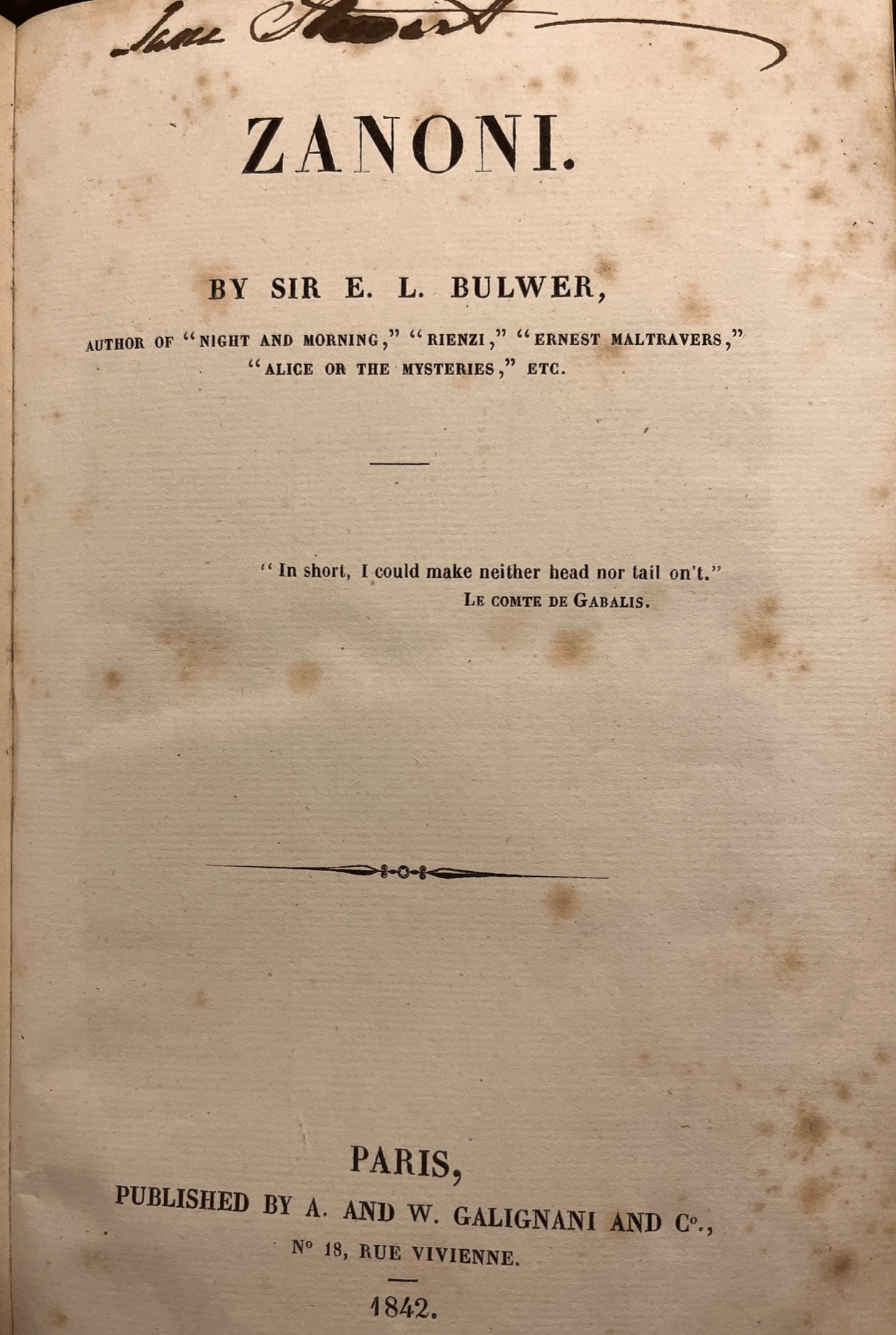
This quote is from Bulwer-Lytton’s Zanoni, a piece of fiction that gained and still gains some fame in Golden Dawn and other occult circles. The allure of this piece of literature is that it actually contains some occult truths, but often veiled in allegory and poetic licence.
Here Mejnour instructs his student Glyndon in the knowledge of occult veils or portals, hinting that each may be passed once a test has been completed successfully by correct words, actions and/or deeds. We see this also in our Ceremonies, where Candidates are barred from progressing until certain actions are undertaken or words communicated.
For the student seeking occult Initiation, the first real veil or portal that must be passed involves summoning sufficient courage to enquire after a teacher, or an occult group. All the students we know pass through this initial veil successfully, but there are many more who do not – that first step is the hardest. We never hear of these people, as they failed to leave the comfort of the herd and take action, and they instead seek refuge in easier paths such as provided by religion, or bury the initial inner spiritual urge until it fades out and is replaced by more material pursuits, or simply they never wake from slumber.
The second veil is encountered shortly after when the student has to actually turn up to their Initiation. Most students that have passed the first veil, pass the second also, but not before doubt and nerves challenge them to a greater or lesser degree. Almost all, if not all Candidates turn up at the door hyper alert having passed through this portal. Here a teacher or introducer must find a fine balance between encouragement and disinterest so that the greater half of the decision is made by the student themselves. The unflinching gaze of the Sentinel is the last thing seen of the posterior life as the veil parts.
The Path of Peh forms the third veil, the mouth and Mars, chatter and arguing, usually from an intellectual perspective, and thus a lingering faith in dogma. It is not until the tongue is held quiet that this veil is pierced by the arrow of Samech and the Mars of Peh is transformed into the Palace of Peace, which is Geburah. “He has made us competent as ministers of a new covenant—not of the letter but of the Spirit; for the letter kills, but the Spirit gives life.” A good number of students take much time to find the key to unlock this portal, many others failing do not progress further on the occult path, or perhaps even slipping back and stepping away from the path altogether. Silence cannot be taught, it must be discovered. However, once discovered, all trappings of darkness fall away. Tolerance of errors in the papers, in others and in oneself are sure signs this veil has parted.
The fourth veil is that of the Path of Teth, epitomised by Strength and Fortitude – the strength and fortitude to step out once more, but this time from the fraternal herd, and to willingly walk a lonely path seeking neither fame nor recognition despite the revelations that might occur during this stage of one’s occult journey, though great they might be. The Hermetic vessel must remain sealed during this phase if the white is to transform into the red. Occult research moves beyond the barriers of written theory, a freedom from egoic judgement allows intuition to reign supreme, and the student now firmly FEELS the hand of their internal guide, the Soul, leading them into new directions and new discoveries. The booming voice of the Hierophant declaring “Prepare to enter the immeasurable region” rings dimly in the past as they speed into the depths of the unknown, uncovering truths that can only be discovered for oneself, things impossible to record in words. Comfort in experimentation comes during this phase of the occult path, as well as simplification of more complex ritual workings.
The fifth veil is encountered in Daath, the junction between the Astral and the Spiritual. It involves a fundamental decision at a sacred crossroad to either remain in a state of ongoing enlightenment apart from material life free of the burden of spiritual responsibility, or to sacrifice self revelation and the giving up of the nectar of the gods, in favour of humbly returning down the occult path in the service of the mundane, willingly taking one’s place actively in Nature in full consciousness so that others might shelter in the light that passing such a test confers. Those who pass through this veil are the great teachers who bring enlightenment to others, either in small numbers or to the masses.
The sixth veil is that of Saturn, of time, and it is only after a great length of practice and service that this veil may be finally passed in preparation for the seven and last veil. It is in some respects the hardest veil to pierce as it requires a long life of full consciousness, as epitomised by the life of CRC, or of the successful alchemist who has extended their life through the use of the philosophers stone. It is said that time heals all wounds. Time also reveals all mysteries.
Death comprises the final veil, the number 10 transforming into the number one, preserving the sacredness of unity. Nothing further can be said of passing this veil by the living.
Kasmillos
Note the image I have used for this post is of a copy of Zanoni that I acquired many years ago. Searching the internet, I found this rare first edition 1842 not from a specialist occult book seller in London, but from a private book collector literally living just down the road from me in sleepy old New Zealand. A happy coincidence.
